Case Presentation
Patient: 9-year-old child.
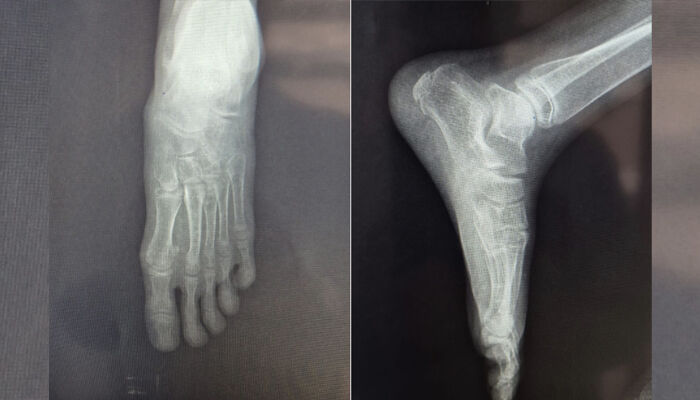
Reason for Consultation: Disabling flatfoot deformity of the decompensated pes planovalgus type, characterized by loss of the medial longitudinal arch and functional impairment during walking.
Diagnosis: Decompensated flexible pes planovalgus.
Surgical Management
Following the failure of conservative treatment and the persistence of functional symptoms, surgical intervention was indicated. The selected technique was subtalar arthroereisis using a tarsal screw implant.
Objective of the Procedure: To reduce calcaneal eversion and restore the physiological architecture of the foot by mechanically limiting excessive pronation of the subtalar joint while preserving the child's skeletal growth.
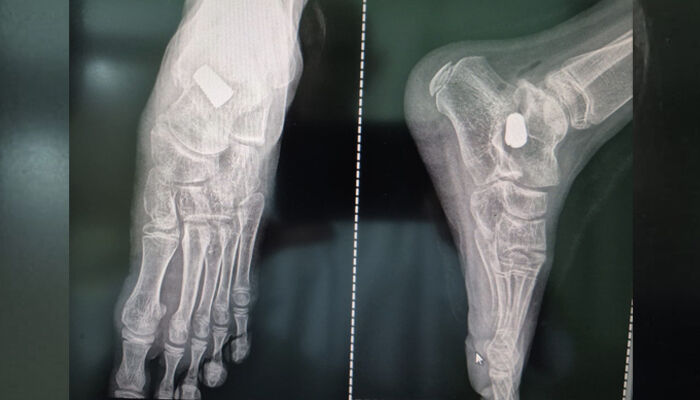
Procedure: Placement of a metallic implant (tarsal screw) within the sinus tarsi, allowing immediate realignment of the hindfoot complex.
Postoperative Course and Follow-up
Immediate postoperative radiographs confirmed satisfactory positioning of the implant within the sinus tarsi, with no evidence of structural bone abnormalities. The patient is currently undergoing a structured postoperative follow-up protocol focused on:
- Pain control and management of inflammatory edema.
- Monitoring tissue viability and peripheral perfusion.
- Functional rehabilitation to ensure a gradual return to weight-bearing.
This procedure demonstrates the effectiveness of minimally invasive surgery in correcting pediatric foot deformities, with the goal of improving the young patient's quality of life and walking comfort.